


Teacher: Daniel Osei
Meet the teacher

Daniel Osei
Daniel is a Ghanaian teacher with 11 years of experience of teaching Physics at the senior high school level. He is currently a Physics teacher at the Presbyterian Boys’ Secondary school, Legon, Accra where he teaches student between the ages of 15 and 18. He is also a STEM advocate, a two time World Smarts STEM mentor and a teacher for IAEA project RAF0060. His inspiration comes from raising students who are problem solving oriented and community and environmentally sensitive.
Overview
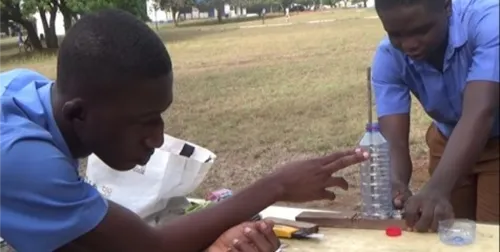
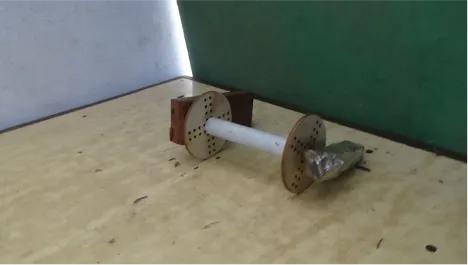
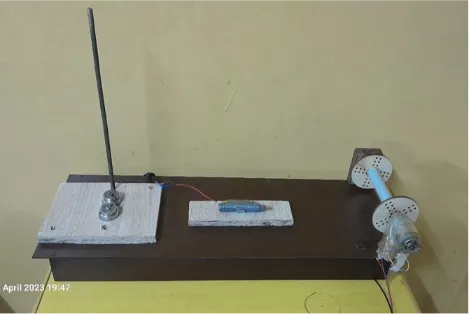
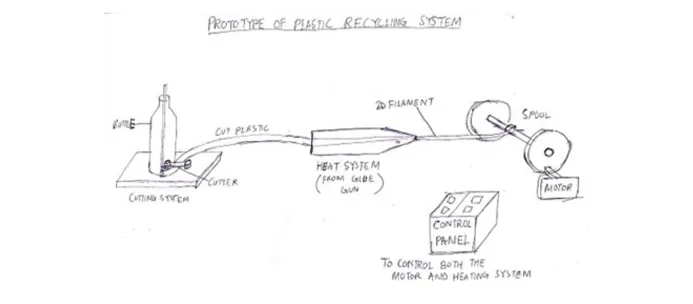
Daniel, a physics teacher at Presbyterian Boys’ Secondary school in Legon, Ghana led his students to part in a cross-cultural exchange to find a solution to the problem of plastic waste in the local area. Students used human-centred design techniques to produce a usable and popular solution to the problem.
Theory of Change
.
Approach and Actions
Two teams of students – one from the Global North and one from the Global South – were brought together to examine the local impacts of climate change on their communities. They brought different perspectives and experiences and this led them to increase their understanding of the effects of climate change across the world. Through working together to mitigate one climate change issue the teams increased their understanding of climate change and also developed cross-cultural collaboration and communication skills.
Impact
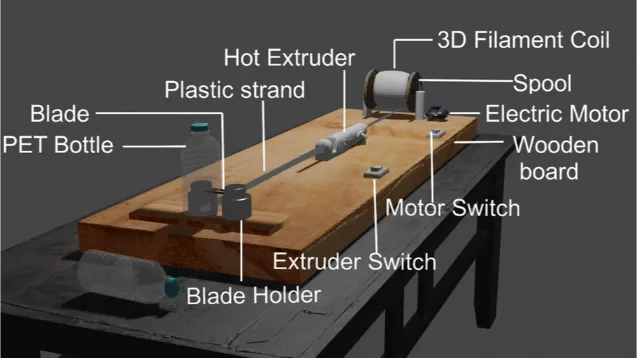
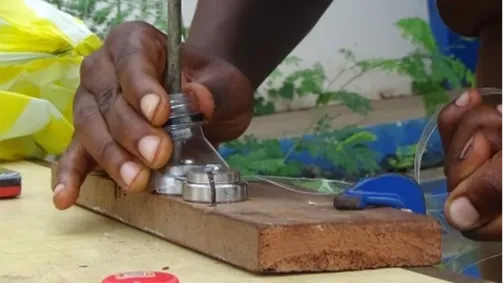
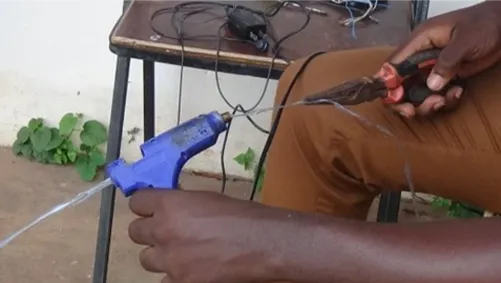
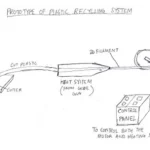
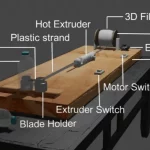
Large amounts of plastic waste, including PET plastic bottles are produced in the area local to Presbyterian Boys’ Secondary school and there is no effective recycling method for disposing of the bottles- bottles are simply discarded or burnt with detrimental effects to the environment. Teams from the USA and Ghana used a process known as ‘Human centred design thinking’ to understand the needs of the community in Ghana; to find opportunities for sustainable solutions to the issue; and to design solutions that the community members would be willing to engage with.