


Teacher: Priyanka Handa Ram
Meet the teacher

Priyanka Handa Ram
Priyanka is a social entrepreneur and children’s author transforming how the world educates, protects and cares for young children. Inspired by play and informed by Africa, she founded a social impact business, Learn To Play, that provides playgroups, parenting programmes and teacher training across the African continent. With an emphasis on sustainable play, social & emotional wellbeing and ensuring every child can access their right to quality early childhood education, Priyanka believes that being happy and healthy is the foundation for learning. With her 17 years of teaching experience, she’s created diverse curricula, training courses and innovative parent outreach including the most sustainable and scalable approaches to education.
In addition, Priyanka has written children’s books about conservation and has been awarded the title of ChangeMaker in Botswana for her work in Education. She’s a Global Leader for Young Children through the World Forum Foundation and is part of the Academy and Global Collections with HundrED. Her educational programmes have been showcased on global platforms for their impact including an early learning COVID-19 response rooted in play and wellbeing. Some of her most rewarding work has been training young people, teachers and parents across Africa, as well as presenting at global events, delivering key addresses on Play, Sustainable Methods of Education, and Community Impact and Development. But most importantly, according to her, she’s the mum of two wonderful children who inspire her to cultivate play and nurturing care for positive impact.
Usefull links related to the Solution
Circle Meeting
Pitch deck 2023
Annual report
Parent Playbox Video
PlayBox Initiative Slide Deck 2.0 (4).pdf
Overview
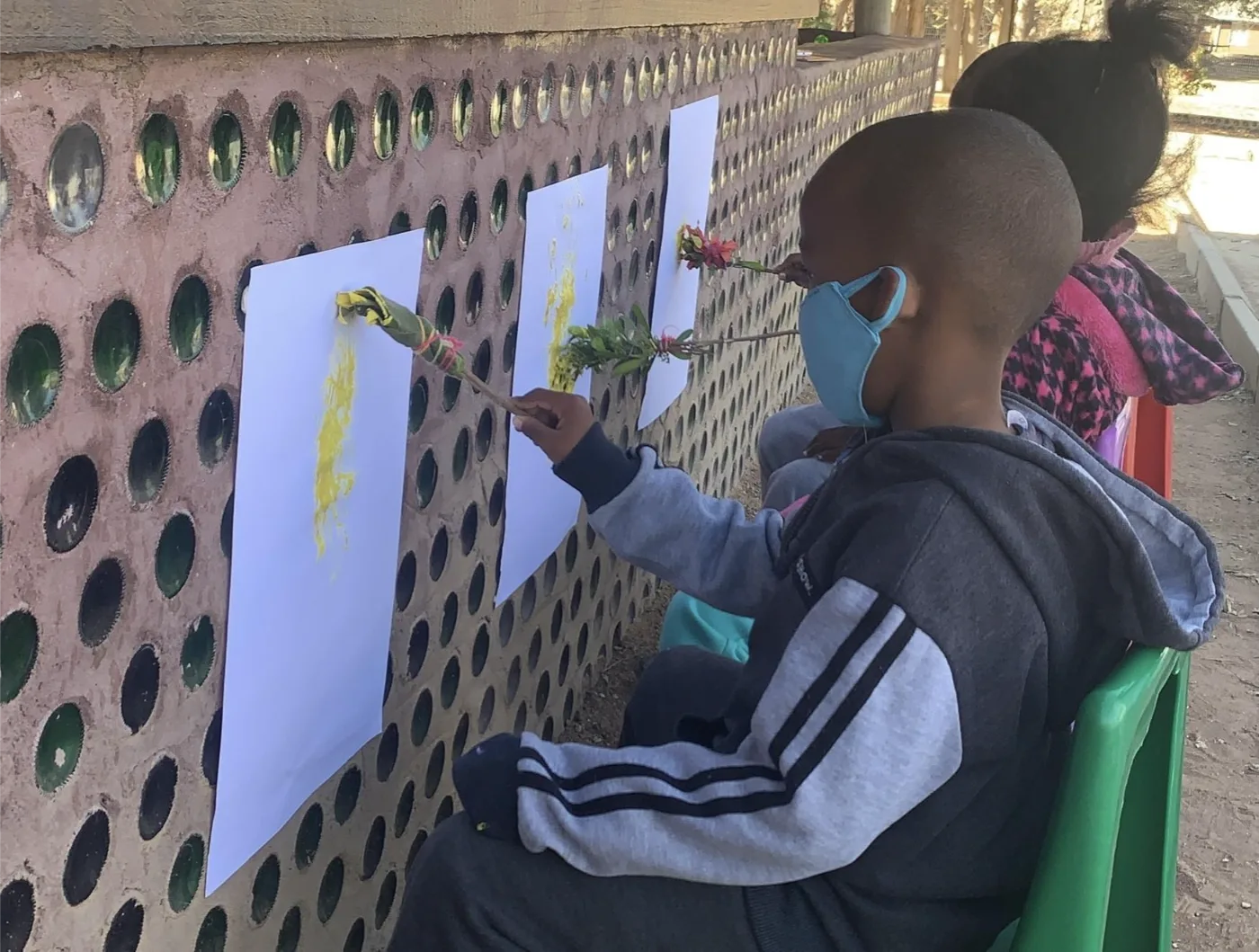
Priyanka developed this solution as a low-cost, theme-based early learning system with the aim of developing a love of and respect for nature; and with sustainability at its heart while achieving school readiness outcomes. All activities are designed to link children to the natural environment and are planned with the local community, culture and daily needs of the children in mind.
Theory of Change
Children need to appreciate and be inspired by nature and the environment to be able to become positive environmental changemakers. Cultural and environmental context specific inputs must be part of children’s learning so they can live in harmony with the local environment developing a respect for and love of it. Playgroups that serve the local community and develop this appreciation of nature can be delivered at low cost by using sustainable, locally available resources.
Approach and Actions
Playgroups are set up utilising existing community-based governance systems. The playgroups are mostly based in outdoor environments so children play and learn in nature. A theme-based curriculum has been developed which focuses on multiple environmental education areas (e.g. Conservation, Wildlife, Nature all around and Water). A mindfulness approach is used throughout the play-based curriculum to build an appreciation and respect for nature, interactive activities for each theme have also been put in place. Teacher training focuses on enabling children to play using sustainable means, this includes training teachers – or ‘Mamapreneurs’ as they are known – sourcing locally available waste materials for producing teaching resources.
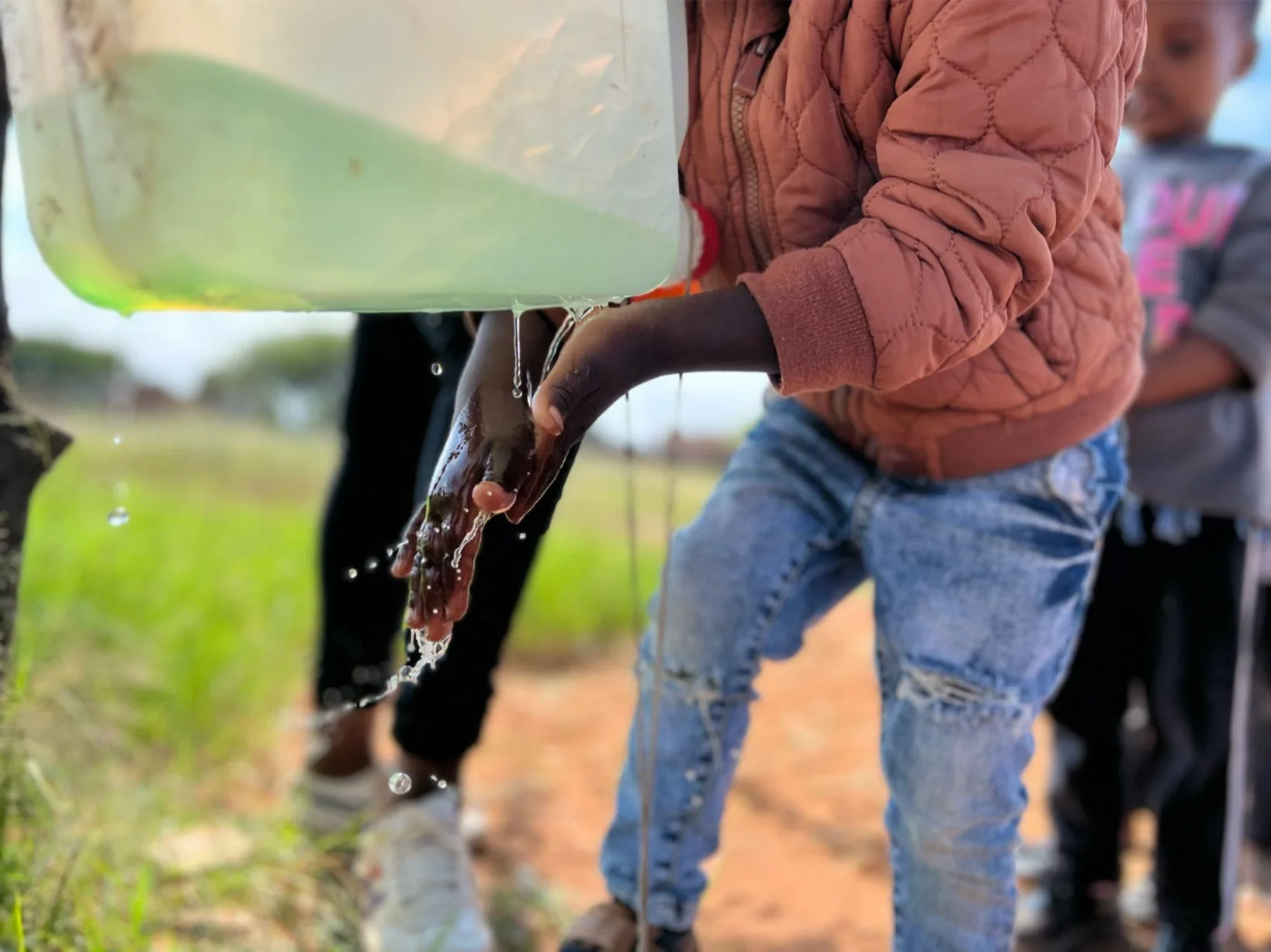
The desert nature of Botswana makes water conservation integral to the project, Mamapreneurs are trained in how to conserve water, for example learning to build a ‘tippy-tap’ at their playgroups for hand hygiene – these use only 40ml of water to wash hands versus 250ml when using a normal tap. Parental and community feedback is incorporated into curriculum development to ensure it is relevant to children’s daily lives, community and context.
The programme has partnered with Earth Warriors to deliver climate change education which enables children to develop a solution-focused mindset through age-appropriate activities such as using their ‘superpowers’ to fight climate change. In addition to training educators and running playgroups, Learn to Play also builds sustainable play programmes for parents/caregivers to deliver in their home environment – thus impacting a child’s entire ecosystem.
Impact
This approach was started in 2017 and has now been rolled out to 11 communities across Botswana, impacting over 1000 children. The teacher training programme has trained 260 Mamapreneurs and educators across three different African countries. The project coordinators however see their biggest impact as being in changing stakeholder mindsets away from a transactional interest in nature towards a nurturing mindset.